



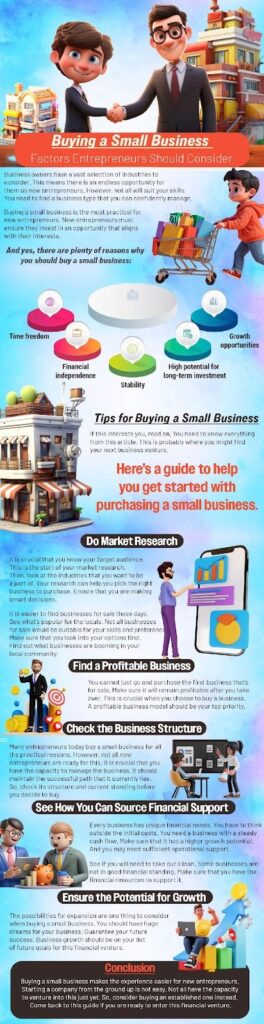
Purchasing a small business is one of the smartest methods to begin earning sooner than starting it at zero. However, it can also be dangerous when you believe the seller too much and neglect to make important checks.
What to look at before you invest money into an existing business
Understand why buying can be easier than starting
A business that is already active has customers, systems and some income history. That would save you time as opposed to building everything from scratch. You are also purchasing old issues. This is why it is important to do this and evaluate it properly.
Check if the business matches your goals.
Not all buyers are suited to all businesses. A deal might appear to be lucrative, yet too difficult or stressful for the lifestyle. You must associate business with your time, abilities, and the income level that you want.
- Lifestyle fit: Select a business that fits your schedule to ensure you can run the business well without experiencing burnout and having to work around the clock.
- Skill alignment: A business is more convenient to expand when it suits your strengths so that you can work to enhance performance without straining it daily.
- Income expectations: Ensure that you can reasonably afford to have your business finance your financial ambitions so that you do not spend much on small returns.
Review the financial documents carefully.
Numbers reveal the truth. You have to verify the income, expense and profit so that you know what you are actually purchasing. Always do not trust verbal statements. Request the explicit documents and compare them.
- Profit clarity: A good business is supposed to experience consistent profit excluding expenses so that you do not purchase high earnings using low earnings of that business.
- Cost patterns: Notable expenses must appear constant so that you do not worry about profit in the future.
- Cash flow health: This is good cash flow that keeps the business afloat and you take your time to expand without strain.
- Debt awareness: Any debt must be clear so that you do not inherit the financial issues that were not intended.
Understand what you are actually buying
Selling a business is not just a name or a product. You can be purchasing systems, brand worth, equipment, supplier contracts and connections with customers. Failure to know what is contained in the deal may land you paying a very small value.
- Asset list: You ought to have a list of assets in full when making a serious business sale to be sure of what you are paid at the end.
- Inventory count: When inventory is included in the deal then it should be counted and appraised in such a way that you do not receive bad and old stock.
- Brand ownership: You ought to ascertain that you gain control of branding to proceed without having a litigation problem in the future.
- Digital access: With the possibility of accounts and systems involved, the transfer should be done appropriately to avoid being locked out in the future.
Finally
To buy a small business is often an excellent idea upon thorough consideration. Attend to confirm financials, operations, and customers and the clarity of assets and safe terms of contracts. When you do this at a young age, you will lessen the risks and shop at ease.
